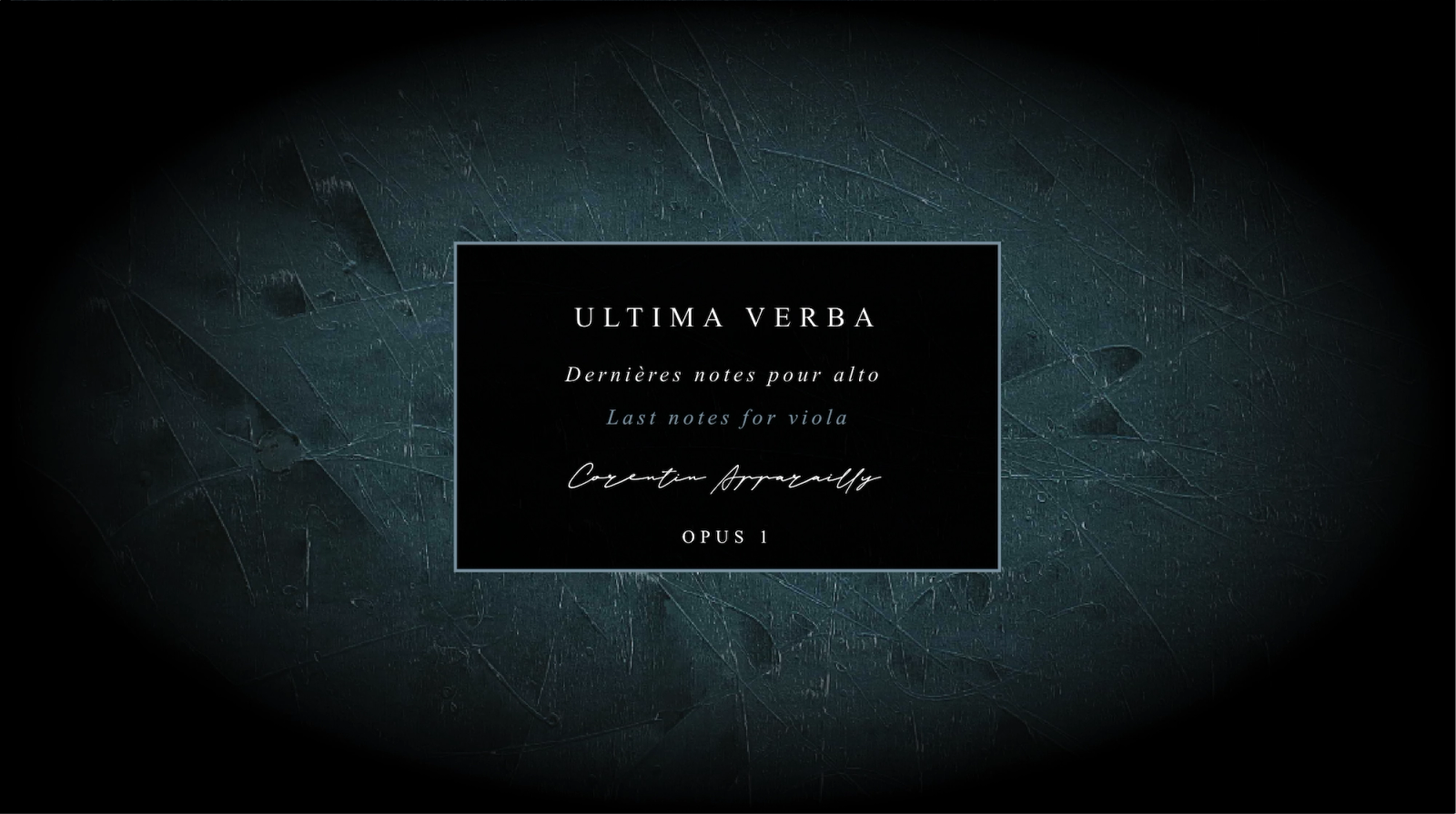
A Score on Farewell to the Instrument
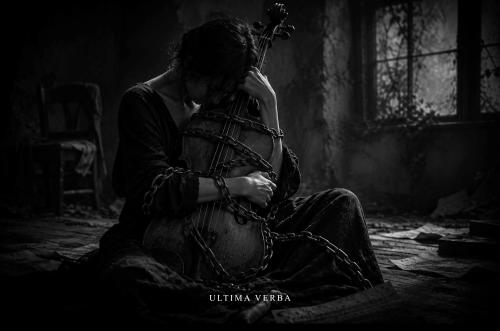
The symbiosis between a musician and their instrument is profound and mysterious. Over the years, the instrument becomes the discreet witness of pivotal moments: it accompanies initial concerts, private hesitations, solitary practice hours, early triumphs, and the heightened emotions of chamber music dialogue. Musicians often entrust their instruments with feelings they would share with no one else. What then should one say when the time comes to bid farewell?
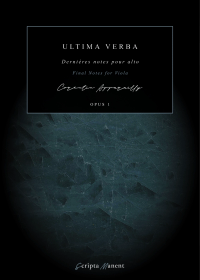
It is from this question that Ultima Verba was born, a new work for solo viola by Corentin Apparailly, published by Scripta Manent.
A Title Between Speech and Legend
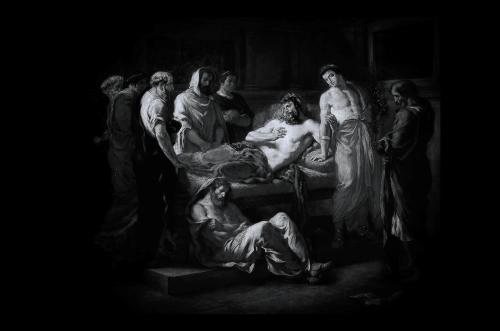
In Latin, Ultima Verba refers to the last words uttered by a historic figure before departing, be it a writer, artist, or statesman. Goethe is famously said to have whispered 'Mehr Licht!' ('More light!') at the end of his life; Rabelais reportedly declared with characteristic wit, 'Draw the curtain, the farce is played.' These formulas endure because they crystallize the encounter between a distinct voice and final silence.
It is this tension of speech which ends but continues to resonate that Corentin Apparailly chose to express, imagining the farewell of a musician to his instrument, like a musical Ultima Verba.
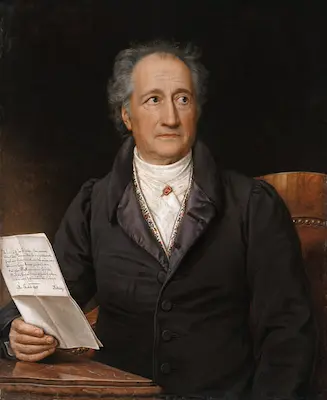
“More light!”
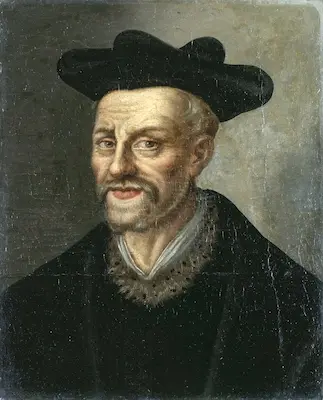
“Draw the curtain, the farce is played.”
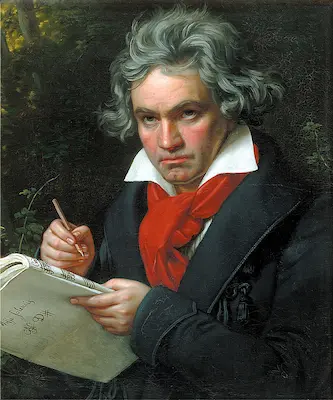
“Applaud, my friends, the comedy is finished”
Performers and Their Instruments: Personal Confidences
“My baby, my violin” is how Angèle Dubeau refers to her 1733 Stradivarius, known as 'Arthur dit Desrosiers.' For violist Sào Soulez-Larivière, recipient of the 2023 Young Artist Award at the International Classical Music Awards, the relationship with his viola — crafted by luthier Frédéric Chaudière in 2013 — is more an encounter than a choice: 'We searched for each other and found each other, so to speak.'
This bond can upend a musician's world if anything befalls the instrument. In 1999, cellist Yo-Yo Ma accidentally left his 1712 'Davidov' Stradivarius—the very instrument played by Jacqueline du Pré—in the trunk of a New York taxi. The hours of intense anguish before the cello was recovered demonstrated how vulnerable a musician feels without their lifelong companion.
Gautier Capuçon, for his part, has been playing for over twenty years on a cello by the Venetian luthier Matteo Goffriller, made in 1701 and on loan from a Swiss collector. "An extension of myself, of my arms, my legs," in the musician's words. It's difficult, then, to imagine the last piece they would play on their instrument: a question that, no doubt, neither of them would like to answer.
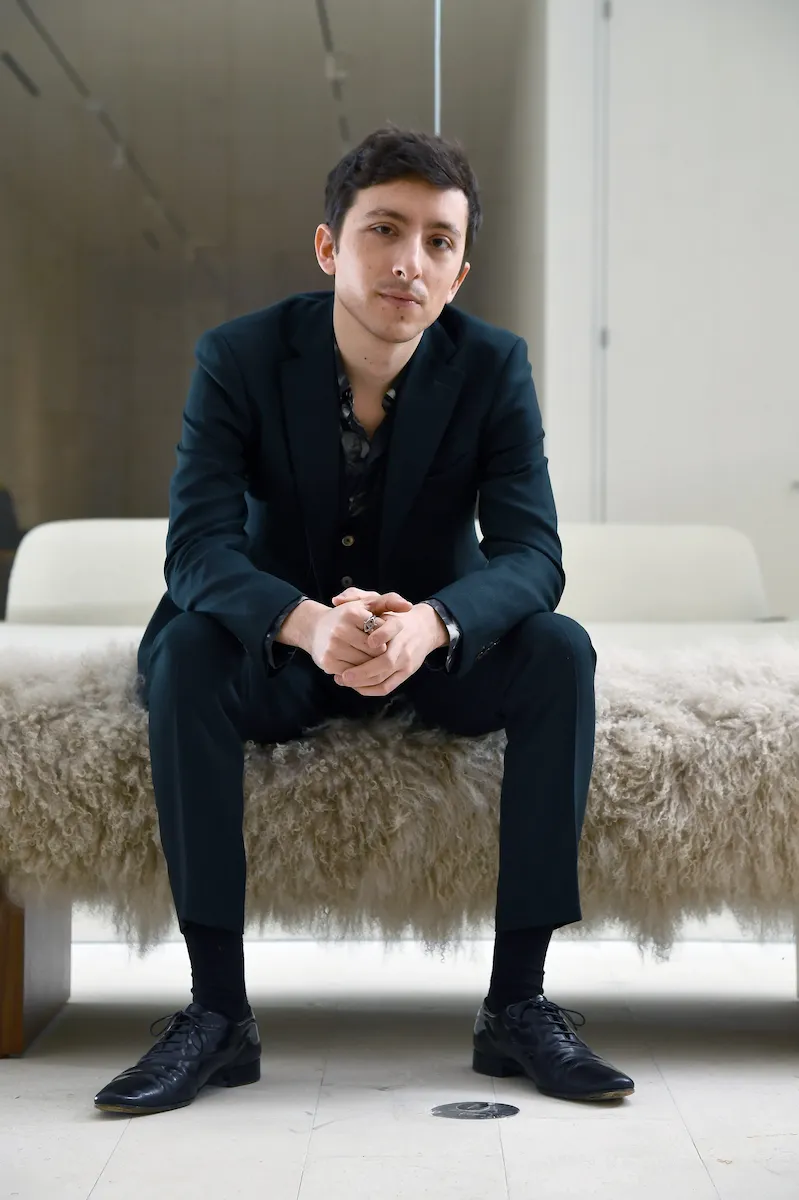
« “For my first published piece, Ultima Verba, I wanted to explore this unique bond by imagining a musician’s emotional farewell to their instrument, taking this opportunity to bid my own symbolic farewell to my viola and embark fully on this new chapter as a composer.” »

Corentin Apparailly and the Viola: A Lifelong Bond
Corentin Apparailly's connection to the viola began long before he could hold one in his hands. His mother, a viola professor at the conservatory, and his father, a violist with the Orchestre du Capitole de Toulouse, made music an omnipresent part of his childhood. In his earliest days in an incubator, his mother placed a small player beside him softly broadcasting Stamitz's Viola Concerto — the only sound capable of soothing him.
For over a decade, he has performed on a custom viola crafted by Stephan von Baehr, a faithful companion that accompanied him to prestigious concert stages across the globe, including his years with the Quatuor Arod.
It is on this instrument that Ultima Verba was conceived and composed, distilling into sound the intimate dialogue between performer and instrument.
Structure of Ultima Verba
The first part opens with deep, low double stops, creating an atmosphere imbued with sadness. Gradually, the theme intensifies, culminating in a heart-rending rage. After this outburst, the music calms into a stripped-down, lullaby-like melody played on the C string and punctuated by disarmingly simple pizzicato in the left hand.
The central section is frenetic and virtuosic, reflecting the raw and hurried speech of someone who knows they won't have time to express everything on their mind. Despair and helplessness intertwine in an emotional turmoil that demands considerable technique and stamina from the performer.
The final section brings back the first theme, now ornamented, fragile, almost pleading. Then the work concludes with the return of the initial lullaby, gentle and peaceful, as if expressing serene acceptance.
Discovering and Acquiring the Score
Born from a deeply personal relationship with the viola, Ultima Verba finds a new life in the hands of each performer. For while the score sets the notes, it leaves each individual the freedom to express their own sensitivity, their silences, and their way of saying goodbye.